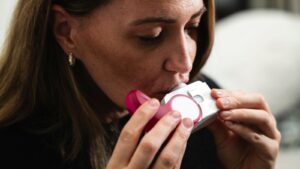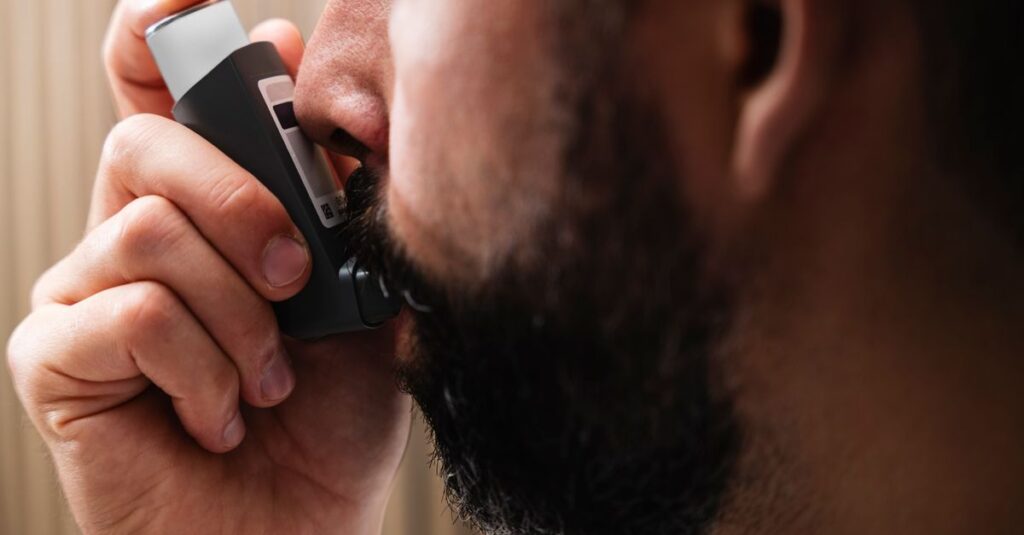
If you are having asthma symptoms and you have a quick-relief inhaler, use it the way your asthma action plan says. Nothing else replaces it. Calm breathing skills and relaxation can help you stay steady, and they work next to your prescribed medicine, never instead of it. If you cannot get your inhaler, the American Lung Association says to seek medical assistance. This page explains what helps while you wait, when to call 911, and how virtual pulmonary rehab with a respiratory therapist can help you prepare for the next flare.
What should I do first if my asthma flares up?
The American Lung Association first aid sheet for an asthma episode lists these steps for excessive coughing, wheezing, shortness of breath or chest tightness. (American Lung Association, First Aid for Asthma)
- Help to an upright position.
- Access the quick-relief inhaler.
- If the quick-relief inhaler is not available, seek medical assistance. If you are helping someone else, never leave them alone.
- Follow the action plan for use of the quick-relief inhaler.
- Get help from a healthcare provider if there are emergency signs.
Your own action plan matters most here. The American Lung Association action plan form says that in the Red Zone you should take your quick-relief medicine now, and that you should feel better within 20 to 60 minutes of quick-relief treatment in the Yellow Zone. If you are getting worse, follow the Red Zone steps and call your doctor or 911 right away. (American Lung Association, My Asthma Action Plan) Your doctor decides which medicine and how many puffs are right for you.
When should I call 911 or go to the emergency room?
The American Lung Association action plan says to call 911 immediately if you have trouble walking or talking due to shortness of breath, if your lips or fingernails are blue, or if you are still in the red zone after 15 minutes. (American Lung Association)
MedlinePlus says to go to the emergency room or call Emergency Medical Services right away for severe shortness of breath at rest, a peak flow measurement of less than 50% of your personal best, a bluish color to the lips and face, extreme difficulty breathing, or severe anxiety due to shortness of breath. (MedlinePlus, Asthma) Do not wait for a rehab session or a video to help. If you are unsure, get help.
What can help me stay calm while I follow my plan?
The American Lung Association notes that emotional stress is a common trigger for asthma. It lists rapid and shallow breathing among common stress symptoms. (American Lung Association, Manage Stress to Keep Asthma in Control) That is why practicing calm breathing before you need it is useful.
Pursed lip breathing
For shortness of breath, the American Lung Association suggests trying pursed lip breathing to relax your airways. (American Lung Association) Use it along with your plan, not instead of your quick-relief medicine.
Belly (diaphragmatic) breathing and relaxation
The same American Lung Association page recommends regular practice of relaxation techniques such as deep breathing exercises, progressive muscle relaxation and imagery, and says diaphragmatic (“belly breathing”) exercises can help with the overall management of asthma. (American Lung Association) Our guide to breathing exercises for asthma shows how to practice them when you feel well.
Do breathing exercises work for asthma?
A Cochrane review of breathing exercises for adults with asthma concluded that they may have some positive effects on quality of life, hyperventilation symptoms and lung function. The same review found that breathing exercises probably did not help to improve asthma symptoms, and it rated the certainty of the evidence from moderate to very low. (Cochrane, Breathing exercises for asthma) In plain words, these skills may help you feel better and more in control day to day. They are not a way to treat an attack.
What should I never do?
- Never skip, delay or replace a prescribed medicine with a breathing exercise. Ask your doctor before changing anything.
- Never wait out a Red Zone episode. Follow your action plan and call 911 if you have the danger signs above.
- Never leave someone with an asthma episode alone.
How can I be ready next time?
- Ask your doctor for a written asthma action plan. MedlinePlus says it should include instructions for your medicines when you are stable, your triggers, and what to do when asthma gets worse. (MedlinePlus)
- Keep your quick-relief inhaler where you can reach it. MedlinePlus says to tell your provider if you use quick-relief medicine twice a week or more.
- Learn your triggers. Our page on how to treat asthma covers the basics, and what to do when you feel short of breath covers breathlessness in general.
Where does pulmonary rehab fit?
Rehab is not an emergency service and it does not prescribe medicine. What it can do is teach and practice the skills above with you. Every rehab session at Bloom Medical Group is one on one, each patient gets an individualized treatment plan, and we meet every patient where they are. Sessions are live by video from home, run by licensed respiratory therapists and clinical exercise physiologists, and billed to commercial insurance. Education sessions about your condition may include other patients. For more on who it suits, see pulmonary rehab for severe asthma.
Frequently asked questions
If you have a quick-relief inhaler, use it as your action plan says, because nothing replaces it. While you do, sit upright. If you cannot get your inhaler, the American Lung Association says to seek medical assistance. Calm breathing skills such as pursed lip breathing may help you stay steady but never replace medicine.
No. A Cochrane review found breathing exercises may improve quality of life, hyperventilation symptoms and lung function, but probably did not improve asthma symptoms. Use your quick-relief medicine and follow your action plan during an attack.
The American Lung Association first aid sheet says that if the quick-relief inhaler is not available, seek medical assistance. Call 911 if you have trouble walking or talking due to shortness of breath, blue lips or fingernails, or you are still in the red zone after 15 minutes.
The American Lung Association says to call 911 immediately if you have trouble walking or talking due to shortness of breath, if your lips or fingernails are blue, or if you are still in the red zone after 15 minutes.
The American Lung Association says emotional stress is a common trigger for asthma. It recommends regular practice of relaxation techniques such as deep breathing, progressive muscle relaxation and imagery. Talk with your doctor about your own triggers.
Rehab can teach and practice breathing and relaxation skills alongside the medicines your doctor prescribes. Bloom sessions are live by video, every rehab session is one on one, and sessions are run by licensed respiratory therapists and clinical exercise physiologists. Rehab does not prescribe medicine and is not for emergencies.
Next step
Not sure whether rehab fits you? Take our free 2 minute lung health assessment.
Ready to talk? Call 1-866-972-8228 or fill out the see if you qualify form.
This article is for education only and is not medical advice. Talk with your doctor about what is right for you.