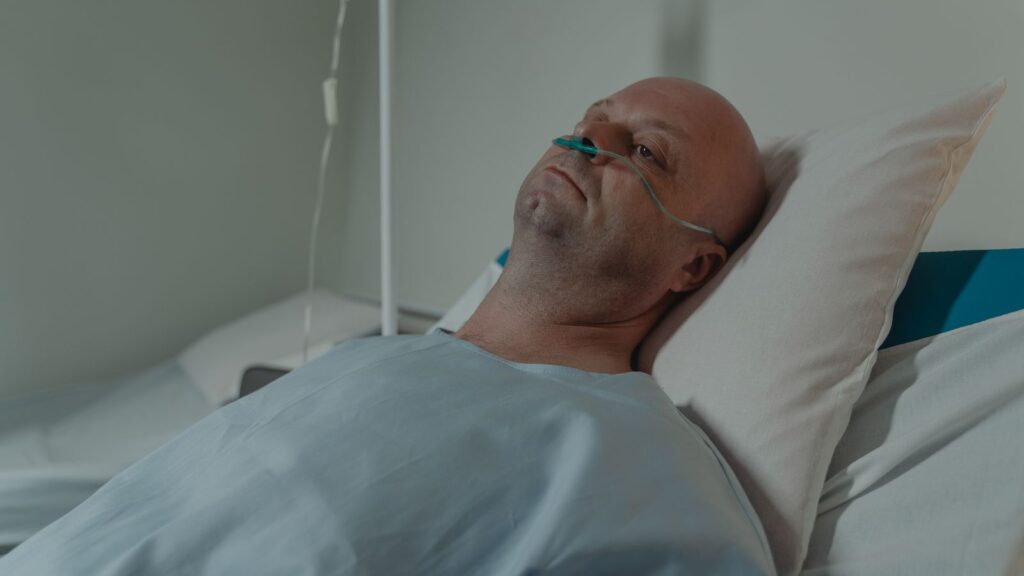
Pulmonary rehab after a hospital stay is recommended for adults with COPD, but studies show that very few people start it. In one large study of Medicare patients hospitalized for COPD, only 1.5 percent began pulmonary rehab within 90 days of going home. After a knee replacement, by comparison, a guideline says physical therapy should start on the day of surgery. This page explains what the numbers show, the reasons researchers give for missed referrals, what guidelines say for COPD and for asthma, and how to ask your care team about rehab before you leave the hospital.
How many people start pulmonary rehab after a COPD hospital stay?
A 2020 JAMA study followed 197,376 Medicare beneficiaries hospitalized for COPD in 2014. Only 2,721, or 1.5 percent, started pulmonary rehab within 90 days of discharge. (Lindenauer et al., JAMA, 2020) The same study found that starting within 90 days was associated with a lower risk of death over one year. It was a retrospective observational study, so it shows an association and cannot prove that rehab caused the difference.
Other studies point the same way. An analysis of 223,832 Medicare patients hospitalized for COPD in 2012 found that 1.9 percent started pulmonary rehab within six months and 2.7 percent within 12 months. (Annals of the American Thoracic Society, 2019) The 2023 American Thoracic Society guideline says that less than 5% of people with COPD who may benefit from pulmonary rehab receive it. (ATS guideline, 2023) The hospital figures come from Medicare beneficiaries, and we did not find a comparable figure for people with commercial insurance.
What do guidelines say about rehab after a hospital stay?
COPD
The 2023 American Thoracic Society guideline makes a strong recommendation, based on moderate quality evidence, that adults with COPD take part in pulmonary rehab after a hospital stay for a flare-up. (ATS guideline, 2023) That recommendation does not set a start date. An earlier 2017 guideline from the European Respiratory Society and the American Thoracic Society suggested starting within three weeks after discharge, a conditional recommendation based on very low quality evidence. (ERS and ATS flare-up guideline, 2017) The GOLD 2026 report describes early rehabilitation after discharge as within four weeks and associates it with improved quality of life. (GOLD 2026 report) Our guide to pulmonary rehab after a COPD flare-up or hospital stay covers timing and how to get ready.
Asthma
For asthma, the guidance starts with follow-up care. The NHLBI asthma guidelines advise follow-up ideally within 7 days of hospital discharge, and the 2026 GINA summary guide says to arrange follow-up within 2 to 7 days after an exacerbation, or 2 to 5 days for children. (NHLBI asthma guidelines, EPR-3; GINA 2026 summary guide)
Pulmonary rehab is mentioned for some people with asthma. For people with limited exercise tolerance or breathlessness from persistent airflow limitation, the GINA 2026 report says to refer for pulmonary rehabilitation, if available. (GINA 2026 report) A 2022 Cochrane review of 10 studies with 894 adults with asthma found that pulmonary rehab probably causes a large increase in physical fitness and a large improvement in wellbeing right after the program. Up to one year later, there may be little to no effect on fitness, and the effect on wellbeing is very uncertain. (Cochrane review, 2022) Medicare’s page on pulmonary rehab programs describes moderate to very severe COPD and does not mention asthma. (Medicare.gov)
Why do so few people start?
Researchers name several reasons. None of them is a single cause, and they differ from place to place.
- Awareness and referral habits. The American Thoracic Society and the European Respiratory Society say suboptimal health care professional awareness is a barrier to referral. (ATS and ERS policy statement, 2015) The 2023 ATS guideline also describes referral of patients to pulmonary rehab as suboptimal. (ATS guideline, 2023)
- Programs are not close by. The 2015 policy statement says patients frequently cite distance and lack of transportation as a major reason for poor program uptake or adherence, and that up to half of eligible patients who are referred never attend. (ATS and ERS policy statement, 2015) A 2023 study of Medicare beneficiaries with COPD found that 61.5 percent lived within 10 miles of a program, compared with 11.3 percent in rural areas. (Malla et al., Annals of the American Thoracic Society, 2023)
- How you feel after a hospital stay. The 2023 guideline lists increased symptoms among the barriers to taking part after hospitalization, along with anxiety and the burden of travel. (ATS guideline, 2023)
- Some groups are referred less. The GOLD 2026 report notes that some groups of patients appear less likely to be referred for pulmonary rehabilitation. (GOLD 2026 report)
Why does rehab after surgery seem more automatic?
Orthopedic surgery shows what a clear starting point looks like. The American Academy of Orthopaedic Surgeons knee replacement guideline states that physical therapy should be started on the day of the surgery, and its supporting recommendation describes strong evidence that starting rehabilitation that day reduces length of hospital stay. (AAOS knee guideline summary) This is an analogy, not a claim about any one hospital. The COPD guidance above is clear that rehab should happen after a hospital stay, though it gives slightly different start windows, within three weeks in 2017 and within four weeks in the GOLD 2026 report.
How can you ask about pulmonary rehab after a hospital stay?
- Before you leave the hospital, ask your care team whether pulmonary rehab is right for you, and whether a referral can be placed before discharge or at your follow-up visit.
- Book a follow-up visit with your own doctor soon after you get home. For asthma, the guidelines above advise follow-up within 7 days.
- Bring your discharge papers, medicine list and any asthma or COPD action plan, and ask which warning signs mean you should call.
- Ask what options are near you, including hospital outpatient programs and programs delivered at home by video. Our page on whether virtual pulmonary rehab is as effective as in person explains what research shows.
- Ask what the referral must include. See do you need a referral for pulmonary rehab.
- Ask your insurer what is covered. See does insurance cover pulmonary rehab and does Medicare cover pulmonary rehab.
Ask your doctor when it is safe to begin, because the right time depends on how you are recovering. If your breathing is getting worse, call your provider, and call 911 if you have emergency signs.
Where Bloom fits in
Bloom Medical Group provides one-on-one virtual pulmonary rehab by video, so there is no trip to a hospital program. Every Bloom rehab session is one-on-one with a licensed respiratory therapist or clinical exercise physiologist. Bloom works alongside your own doctor, and a referral from that doctor is needed to start.
Frequently asked questions
In a 2020 JAMA study of 197,376 Medicare beneficiaries hospitalized for COPD, 1.5 percent started pulmonary rehab within 90 days of discharge. A 2019 analysis of Medicare patients found 1.9 percent started within six months.
Yes. The 2023 American Thoracic Society guideline strongly recommends that adults with COPD take part in pulmonary rehab after a hospital stay for a flare-up, based on moderate quality evidence. Ask your doctor when it is safe for you to start.
Guidelines first advise a follow-up visit within 7 days. The GINA 2026 report says to refer some people with limited exercise tolerance for pulmonary rehabilitation, if available. Ask your doctor whether it fits you.
Researchers name limited awareness, referral habits, programs that are not nearby, travel and transportation problems, and symptoms or anxiety after a hospital stay. Some groups of patients also appear less likely to be referred.
Ask your care team whether pulmonary rehab is right for you and whether a referral can be placed before discharge or at your follow-up visit. Bring your medicine list and action plan, and ask which warning signs mean you should call.
Bloom provides one-on-one virtual pulmonary rehab by video. A referral from your own doctor is needed, and your doctor can tell you when it is safe to begin. You can call 1-866-972-8228 to check your plan.
Next step
Not sure whether rehab fits you? Take our free 2 minute lung health assessment.
Ready to find out if you qualify? Call Bloom Medical Group at 1-866-972-8228 or fill in the see if you qualify form. One-on-one virtual pulmonary rehab with licensed respiratory therapists and clinical exercise physiologists, billed to commercial insurance. Read how virtual pulmonary rehab at Bloom works.
This article is for education only and is not medical advice. Talk with your doctor about what is right for you.
Sources
- Lindenauer PK, et al. Association between initiation of pulmonary rehabilitation after hospitalization for COPD and 1-year survival among Medicare beneficiaries. JAMA. 2020;323(18):1813-1823
- Annals of the American Thoracic Society. 2019;16(1):99. Pulmonary rehabilitation participation after COPD hospitalization among Medicare patients
- American Thoracic Society. Pulmonary rehabilitation for adults with chronic respiratory disease, official clinical practice guideline. Am J Respir Crit Care Med. 2023;208(4):e7
- European Respiratory Society and American Thoracic Society. Management of COPD exacerbations, clinical practice guideline, 2017
- Global Initiative for Chronic Obstructive Lung Disease. GOLD Report 2026
- American Thoracic Society and European Respiratory Society. Policy statement on pulmonary rehabilitation. Am J Respir Crit Care Med. 2015;192(11):1373
- Malla G, et al. Access to pulmonary rehabilitation among Medicare beneficiaries with COPD. Ann Am Thorac Soc. 2023;20(4):516-522
- NHLBI. Expert Panel Report 3, Section 5: Managing exacerbations of asthma
- Global Initiative for Asthma. GINA 2026 Summary Guide
- Global Initiative for Asthma. GINA 2026 Strategy Report
- Cochrane. Pulmonary rehabilitation for adults with asthma, 2022 (AIRWAYS)
- Medicare.gov. Pulmonary rehabilitation programs
- American Academy of Orthopaedic Surgeons. Knee replacement clinical practice guideline, key statement