If you have ever looked at a breathing test report and wondered what FEV1 means, you are not alone. The number can feel like a grade on your lungs. This guide explains what FEV1 is, how the test is done, how results are usually expressed, and how the number relates to pulmonary rehab. The short version: your results help your care team understand your lungs, but rehab is not a prize for a certain score, and your doctor is the right person to explain your own numbers.
What is FEV1?
FEV1 stands for forced expiratory volume in 1 second. It is one of the values that can appear on a spirometry report. The American Lung Association describes spirometry as the most common pulmonary function test. It measures how much air you can breathe in and out of your lungs, along with how quickly you can exhale. FEV1 is the part of that picture that looks at the first second of a hard, fast breath out.
MedlinePlus lists forced vital capacity (FVC) and FEV1 among the values that may appear on a pulmonary function test report. Your report may include other numbers too, so ask your provider to point out which ones matter most for your condition.
How the breathing test is done
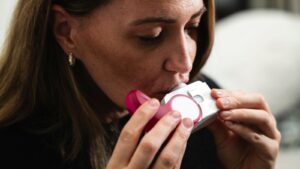
According to the American Lung Association, you sit upright and wear a nose clip, then breathe into a mouthpiece. You take as big and deep a breath as possible and blow out as hard and fast as you can. The test is repeated at least three times, and it takes about 30 to 45 minutes. A technician may also give a medicine that opens your airways and repeat the test to see whether your breathing improves.
How results are usually expressed
Your results are compared with predicted values based on your age, sex, height and weight, and they are calculated as a percentage of those predicted values, as MedlinePlus explains. The same page notes that normal value ranges may vary slightly among labs. The American Lung Association adds that normal values are based on age, height and gender, and that sometimes a person with normal lungs may have a breathing test value that is abnormal. That is one reason a single number should never be read alone.
What an abnormal result may mean
MedlinePlus says abnormal results usually mean that you may have chest or lung disease. It describes two broad patterns:
- Airway diseases such as emphysema, asthma and chronic bronchitis can cause the lungs to hold too much air and take longer to empty.
- Diseases that scar the lungs and make them smaller, such as pulmonary fibrosis, can leave the lungs with too little air.
MedlinePlus also notes that muscle weakness can produce abnormal results even when the lungs are normal. Only your doctor can tell you what your own results mean, and the answer depends on your symptoms and your other tests.
Does FEV1 decide whether you can do pulmonary rehab?
Rehab is a medical program, so your doctor makes the referral. The National Heart, Lung, and Blood Institute (NHLBI) says pulmonary rehab is used for certain lung conditions such as COPD, asthma, pulmonary hypertension and cystic fibrosis. It does not describe a minimum FEV1 you must reach. If you are unsure how your own numbers fit, our guide to referrals for pulmonary rehab explains how the process usually starts.
What a rehab team measures at the start
NHLBI says the team uses several tests to design your plan:
- Breathing tests to check how well your lungs are working
- An exercise stress test to measure your oxygen level, blood pressure and heart rate while you exercise
- A six-minute walk test to measure how far you can walk in six minutes
So your breathing test is one input, alongside how you do when you are moving. For a look at a first visit, see what happens in a pulmonary rehab session.
What rehab can change, and what it is not measured by
This is the part many people do not expect. A Cochrane review of pulmonary rehabilitation in COPD included 65 studies with 3,822 participants. Its authors concluded that rehab is beneficial in improving health-related quality of life and exercise capacity. The six-minute walk distance improvement was greater than the threshold of clinical significance, and the authors wrote that rehab relieves breathlessness and fatigue and improves emotional function.
The review did not report FEV1 as an outcome. FEV1 appears in it only as a description of the people who took part: the rehabilitation group averaged 39.2% predicted at baseline. In plain terms, the benefits that were measured were how far people could walk, how they felt and how breathless they were, not a change in the breathing test number. A reasonable takeaway is that your FEV1 describes your starting point, while rehab is judged by what you can do and how you feel. Your care team can tell you which results to watch in your case.
The CDC also describes pulmonary rehab programs as personalized and says they teach you how to manage your COPD symptoms, including how to breathe better and conserve energy. If your goal is more stamina, see how to improve lung capacity for what breathing exercises and rehab can and cannot do.
Questions to ask your doctor about your results
- Which numbers on my report matter most for my condition?
- What is my FEV1 as a percent of predicted, and how did the lab calculate it?
- Was this test done before or after a medicine to open my airways?
- How often should the test be repeated to track my lungs?
- Is pulmonary rehab right for me now, and can you send the referral?
If shortness of breath is part of your day, our guide on what to do when you feel short of breath has practical steps. For specific conditions, see exercises for COPD, pulmonary rehab for pulmonary fibrosis and ILD and pulmonary rehab for severe asthma.
Where Bloom fits
Bloom offers virtual pulmonary rehab from the comfort of home. Every rehab session is one on one and live by video, run by licensed respiratory therapists and clinical exercise physiologists, and billed to insurance. Each patient gets an individualized treatment plan, and we meet every patient where they are. Education sessions about your condition may include other patients. Bring your most recent breathing test report to the conversation so we can talk about your goals.
Frequently asked questions
FEV1 stands for forced expiratory volume in 1 second. It is one of the values that can appear on a spirometry report, and it reflects how much air you can blow out in the first second of a hard, fast breath. Your doctor explains what your number means for you.
It depends on you. Results are compared with predicted values based on age, sex, height and weight, and are usually shown as a percentage of those predicted values. Normal ranges can vary slightly between labs, so ask your provider how your result compares.
NHLBI describes pulmonary rehab as a supervised program for certain lung conditions and does not give a minimum FEV1. Your doctor decides whether rehab fits you and sends the referral.
A Cochrane review of rehab in COPD reported improvements in exercise capacity, quality of life, breathlessness and fatigue. It did not report FEV1 as an outcome. Ask your care team which results to watch in your case.
You sit upright with a nose clip, breathe into a mouthpiece, take a big deep breath and blow out as hard and fast as you can. The American Lung Association says it is repeated at least three times and takes about 30 to 45 minutes.
Ready to talk about rehab?
Not sure whether rehab fits you? Take our free 2 minute lung health assessment. Ready to take the next step? Call 1-866-972-8228 or fill out the see if you qualify form.
This article is for education only and is not medical advice. Talk with your doctor about what is right for you.