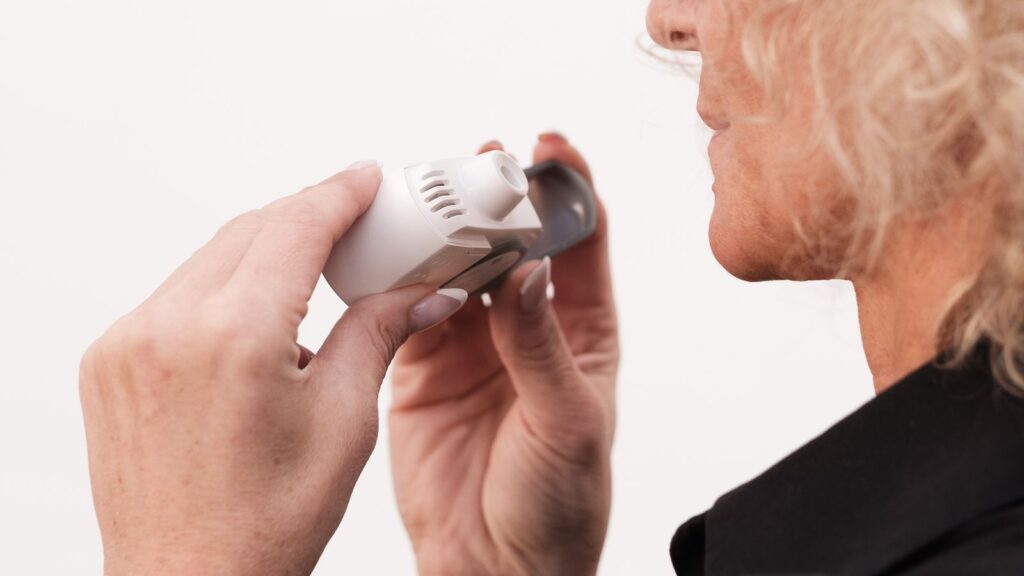
You can improve how well your lungs work for you, but the evidence does not show that breathing exercises or rehab make damaged lungs hold more air. What the research does support is better exercise capacity, less breathlessness and fatigue, and a better sense of control. That difference matters when you search for how to improve lung capacity, because it tells you what to expect and what to ask your doctor. This page covers what breathing exercises can do, what pulmonary rehab can do, what neither can do, and one skill to try today.
What does lung capacity mean, and can it be improved?
Lung capacity usually means how much air your lungs can hold and move, which a breathing test such as spirometry measures. Many people also use the phrase to mean how much they can do before they run out of breath. Those are two different things, and the research mostly measures the second one.
The American Lung Association describes pulmonary rehab as a program that can “improve lung function, reduce symptom severity and improve quality of life.” (American Lung Association, Pulmonary Rehabilitation) MedlinePlus is more cautious about lasting damage: “Pulmonary rehabilitation does not cure COPD,” and it says there is no cure for COPD. (MedlinePlus, COPD) Read together, rehab helps you feel and function better with the lungs you have. It is not a way to rebuild lung tissue that disease has already damaged.
If you want to know what your own breathing test numbers mean, ask your doctor. Everyone’s starting point differs, and so does what a realistic goal looks like with COPD, asthma or interstitial lung disease.
Do breathing exercises improve lung capacity?
The best summary of the evidence is a Cochrane review of breathing exercises for COPD. It included 16 randomized trials with 1,233 participants whose lung function was reduced (FEV1 between 30% and 51% of predicted). Exercises lasting 4 to 15 weeks improved functional exercise capacity compared with no intervention. Effects on breathlessness and quality of life were not consistent from study to study. (Holland AE, et al. Cochrane Database Syst Rev. 2012;10(10):CD008250. PMID 23076942)
The review reported six-minute walk gains of about 45 meters for pranayama yoga breathing over three months, and single studies of pursed lip breathing (about 50 meters) and diaphragmatic breathing (about 35 meters) showed similar gains. The authors also cautioned that patient-reported benefits “may have been overestimated” because the trials were not blinded, that breathing exercises “may be useful” for exercise tolerance in selected people who cannot do exercise training, and that the data do not support a widespread role for breathing exercises in comprehensive COPD management. No significant adverse effects were reported.
In plain words, breathing exercises may help you walk a bit farther, but they are not a stand-alone treatment, and the review does not report that they raise lung function numbers. The American Lung Association describes pursed lip breathing as a way to reduce the number of breaths you take and keep your airways open longer, and notes that regular practice can help make your lungs more efficient. (American Lung Association, Breathing Exercises) Our video on pursed lip breathing and our article on what to do when you feel short of breath cover the technique.
What does pulmonary rehab add beyond breathing exercises?
Rehab combines monitored exercise, breathing skills and education, which is why its evidence base is larger. A Cochrane review of pulmonary rehab for COPD pooled 65 randomized trials with 3,822 participants. Compared with usual care, the authors found statistically significant improvements in all outcomes measured, including quality of life, six-minute walk distance and maximal exercise capacity. Several quality of life measures improved by more than the minimal clinically important difference. (McCarthy B, et al. Cochrane Database Syst Rev. 2015;(2):CD003793. PMID 25705944)
The authors summarized it this way: pulmonary rehab “relieves dyspnoea and fatigue, improves emotional function and enhances the sense of control.” Notice what is on that list: breathlessness, fatigue, mood and confidence. It is a list about living better with a lung condition. For more, see the benefits of pulmonary rehab and pulmonary rehab versus exercising on your own.
What can and cannot be changed?
What you can work on
- Exercise capacity: how far or how long you can move before you have to stop.
- Breathlessness and fatigue during daily tasks.
- Breathing technique, so each breath works as efficiently as possible.
- Confidence and emotional well-being around activity.
What exercise and rehab do not do
They do not cure lung disease or regrow damaged lung tissue. MedlinePlus says that quitting smoking is the best way to slow lung damage in COPD. (MedlinePlus, COPD) It also describes normal aging changes in the lungs: the diaphragm weakens, the air sacs lose their shape, and the lungs recover less easily after exposure to smoke or other harmful particles, and it recommends physical exercise to improve lung function. (MedlinePlus, Aging changes in the lungs) Staying active is worth doing for these reasons, with realistic expectations about what it changes.
A skill to try: the talk test
Exercise is the part of this topic with the strongest evidence, but many people do not know how hard to push. The CDC offers a simple rule of thumb: “a person doing moderate-intensity aerobic activity can talk, but not sing, during the activity,” while someone doing vigorous activity “cannot say more than a few words without pausing for a breath.” (CDC, Measuring physical activity intensity) That is general guidance for adults. If you have a lung condition, your clinician may set a different target for you, so use this as a conversation starter and not as a replacement for their plan. Our companion video walks through it.
- Sit and rest for a minute, with your usual medicines within reach.
- Start walking at an easy pace, or begin your clinician’s chosen activity.
- Say a short sentence out loud. Can you finish it without gasping?
- If you can talk but could not sing, you are likely at a moderate effort. If you can only say a few words, slow down.
- Rest as needed, and tell your clinician what you found.
For total weekly activity, the CDC’s general adult guidance is 150 minutes of moderate-intensity activity a week plus muscle strengthening on at least 2 days. (CDC, Adult activity guidelines) People with lung disease often need to build up to that slowly and with their clinician’s input.
When should you get urgent help?
If your breathing suddenly gets worse, stop and follow your action plan. The American Lung Association advises: “If you continue to be short of breath, call 911 and seek immediate medical attention.” (American Lung Association, Breathing Exercises) Do not try to exercise your way through a flare-up.
How Bloom Medical Group can help
Bloom provides one-on-one virtual pulmonary rehab, live by video, with sessions run by licensed respiratory therapists and clinical exercise physiologists, billed to commercial insurance. It is built for adults with COPD, moderate to severe asthma, ILD or long COVID who want a plan matched to their own breathing and their own goals. See what happens in a pulmonary rehab session and how virtual pulmonary rehab at home works.
Frequently asked questions
You can improve how well you use your lungs, such as how far you can walk and how breathless you feel. Research does not show that exercises restore lung tissue that disease has damaged. MedlinePlus states that pulmonary rehabilitation does not cure COPD.
A Cochrane review of 16 trials found that breathing exercises improved functional exercise capacity in people with COPD, but effects on breathlessness and quality of life were not consistent. The authors said the data do not support a widespread role for them in comprehensive COPD management.
Pulmonary rehab programs combine monitored exercise, breathing techniques and education. A Cochrane review of 65 trials found they improved quality of life and walking distance in people with COPD. Ask your doctor which activities are safe for you before you start.
The CDC gives a rule of thumb: at moderate effort you can talk but not sing, and at vigorous effort you cannot say more than a few words without pausing. If you have a lung condition, your clinician may set a different target for you.
No source we reviewed says rehab reverses lung damage. The American Lung Association says it can improve lung function, reduce symptom severity and improve quality of life, while MedlinePlus says it does not cure COPD. Expect better function and fewer symptoms, not new lung tissue.
Yes. Bloom provides one-on-one virtual pulmonary rehab, live by video, with sessions run by licensed respiratory therapists and clinical exercise physiologists, billed to commercial insurance. You can call 1-866-972-8228 to check your plan.
Next step
Not sure whether rehab fits you? Take our free 2 minute lung health assessment.
Ready to find out if you qualify? Call Bloom Medical Group at 1-866-972-8228 or fill in the see if you qualify form. One-on-one virtual pulmonary rehab with licensed respiratory therapists and clinical exercise physiologists, billed to commercial insurance.
This article is for education only and is not medical advice. Talk with your doctor about what is right for you.
Sources
- Holland AE, et al. Breathing exercises for chronic obstructive pulmonary disease. Cochrane Database Syst Rev. 2012;10(10):CD008250. PMID 23076942
- McCarthy B, et al. Pulmonary rehabilitation for chronic obstructive pulmonary disease. Cochrane Database Syst Rev. 2015;(2):CD003793. PMID 25705944
- American Lung Association. Breathing Exercises
- American Lung Association. Pulmonary Rehabilitation
- MedlinePlus. COPD
- MedlinePlus. Aging changes in the lungs
- CDC. Measuring physical activity intensity
- CDC. Physical activity guidelines for adults