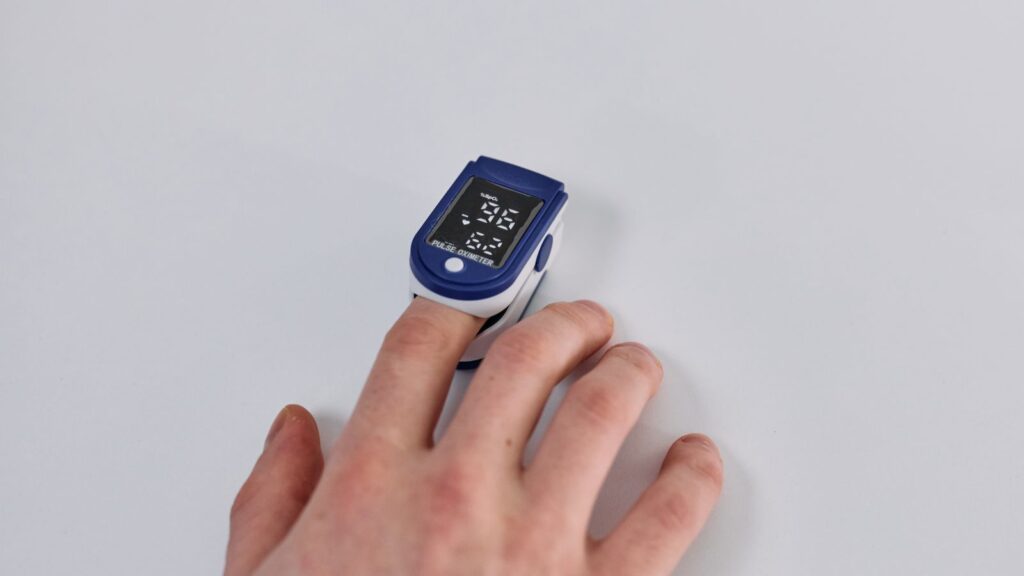
Short answer: the benefits of pulmonary rehab are well studied. In a Cochrane review of 65 randomized trials with 3,822 people with COPD, rehab eased breathlessness and fatigue, improved quality of life, and added about 44 meters (144 feet) to a 6 minute walk. The reviewers concluded that more trials comparing rehab with usual care are not needed. Rehab delivered at home through telehealth has done about as well as rehab at a center for walking distance in the trials so far, and more people finished it.
Below is each benefit and what the studies actually found, how virtual pulmonary rehab compares with going to a center, and how to get started. The studies behind every number are listed at the end of the page.
What pulmonary rehab is
The American Thoracic Society describes pulmonary rehab as a treatment program of individualized exercise, education and support. The National Heart, Lung, and Blood Institute calls it a supervised medical program that helps people with lung disease live and breathe better. It is not a gym membership and it is not a video library. A clinician assesses you and tailors the exercise to you.
A program usually includes:
- Endurance and strength exercise, prescribed for you.
- Breathing techniques such as pursed lip breathing, and ways to pace yourself during daily tasks.
- Education on your condition, your inhalers and what to do when symptoms flare.
- Support for the worry and low mood that can come with chronic breathlessness.
According to the American Thoracic Society, most programs meet two or three times a week and last 8 to 12 weeks or more. Our guides on how long pulmonary rehab takes and what happens in a pulmonary rehab session go into more detail.
The benefits of pulmonary rehab, and what the studies found
1. Less shortness of breath
In the Cochrane review of people with COPD, rehab eased breathlessness by more than the smallest change patients notice, based on moderate quality evidence. The American Lung Association puts it simply: in rehab you learn to exercise with less shortness of breath.
2. Walking farther and doing more
Across 38 studies with 1,879 people, rehab added about 44 meters (144 feet) to the distance people could walk in 6 minutes, the standard test of everyday walking ability. Maximal exercise capacity improved as well. The American Thoracic Society notes that rehab can increase your stamina, your ability to exercise and your independence.
3. Better quality of life and more energy
The same review found that rehab eased fatigue, helped people feel more in control of their condition, and improved quality of life by more than the smallest change patients notice. The National Heart, Lung, and Blood Institute notes that rehab can make it easier to manage routine activities, work, and outings or social activities you enjoy.
4. Fewer return trips to the hospital after a flare-up
A separate Cochrane review looked at rehab started after a COPD flare-up. In 8 studies with 810 people, rehab cut the odds of going back to the hospital by 56 percent, though studies added in the latest update found smaller effects than the earlier ones. The same review found high quality evidence that rehab after a flare-up improves quality of life, and walking distance improved by about 62 meters on average. The American Lung Association notes that rehab may even decrease the need for hospital visits.
5. Less anxiety and depression
In a 2019 review of 11 studies with 734 people with COPD, rehab brought a moderate drop in anxiety and a large drop in depression symptoms, based on moderate certainty evidence. The National Heart, Lung, and Blood Institute lists reducing symptoms of anxiety or depression among the benefits of rehab. If panic and breathlessness are tangled together for you, our page on breathing anxiety covers that cycle.
6. A link with longer survival after a COPD hospital stay
A 2020 study in JAMA followed 197,376 older adults in the United States, average age 77, who had been hospitalized for COPD. Only 1.5 percent started pulmonary rehab within 90 days of going home. Those who did had a lower risk of dying over the following year, after the researchers adjusted for differences between patients (hazard ratio 0.63, an absolute difference of 6.7 percentage points). This was an observational study, so it shows an association rather than proof that rehab caused the difference. It also shows how few patients start rehab after a hospital stay.
It is not only for COPD
In its 2023 clinical practice guideline, the American Thoracic Society made strong recommendations for pulmonary rehab in adults with stable COPD, after a hospital stay for a COPD flare-up, and in interstitial lung disease, and a conditional recommendation in pulmonary hypertension. Cochrane reviews and other studies have found benefits beyond COPD as well:
- Interstitial lung disease and pulmonary fibrosis: in a Cochrane review of 21 studies, rehab was safe and people walked about 40 meters farther in 6 minutes, with gains in walking, breathing and quality of life still present 6 to 12 months later. See rehab for ILD.
- Asthma: in a Cochrane review of 10 studies with 894 adults, those who did rehab walked about 80 meters farther in 6 minutes. See pulmonary rehab for severe asthma.
- Long COVID: a 2025 review of 37 randomized trials with 3,363 people found that rehab improved physical capacity and lung function. See does pulmonary rehab help long COVID.
Why so few people who could benefit get it
The American Thoracic Society states plainly that despite its known benefits, pulmonary rehab is underused, and the hospital study above found that only 1.5 percent of patients started it within 90 days of discharge. A center program means traveling there two or three times a week for 8 to 12 weeks or more, and the American Thoracic Society notes that virtual programs emerged to make it easier for people who live far from medical centers to take part. If you work, our page on pulmonary rehab while working full time looks at scheduling.
Does virtual pulmonary rehab work as well?
This has now been studied directly. A 2021 Cochrane review of telerehabilitation, meaning rehab delivered at home through telehealth, included 15 studies with 1,904 people, almost all with COPD. Here is what it found when telerehab was compared with rehab at a center:
- Walking distance: probably little or no difference. The average difference in 6 minute walk distance was 0.06 meters, based on 4 studies with 556 people and moderate certainty evidence.
- Quality of life and breathlessness: similar between the two, though this evidence is low certainty.
- Finishing the program: 93 percent of people finished telerehab, compared with 70 percent who finished rehab at a center.
- Safety: the reviewers noted no adverse effects of telerehabilitation.
- After a program: ongoing telerehab as maintenance added about 78 meters to 6 minute walk distance compared with no rehab, in 2 studies with 209 people and low certainty evidence.
The American Thoracic Society’s 2023 guideline made a strong recommendation that patients with chronic respiratory disease be offered the choice of center-based rehab or telerehabilitation, based on moderate quality evidence.
The honest limits: most of these studies were in COPD, several outcomes rest on low certainty evidence, and virtual programs differ a great deal from one another. The American Thoracic Society’s patient guide describes virtual rehab as an alternative option rather than a replacement for center-based rehab. The fair summary: in the trials so far, mostly in COPD, rehab at home through telehealth matched rehab at a center on walking distance, and more people finished it. Our page on whether virtual pulmonary rehab is as effective as in person goes deeper on the comparison.
What to look for in a virtual program
As the American Thoracic Society describes it, pulmonary rehab is individualized: a clinician assesses you and tailors the exercise to you. Before you sign up for any virtual program, ask:
- Who runs each session? At Bloom, licensed respiratory therapists and clinical exercise physiologists lead the sessions.
- Is it one on one or a group? At Bloom one on one is the standard. See group versus one on one pulmonary rehab.
- Is it live, or a library of videos? Pre-recorded videos and app based plans are not the same as a live session with a clinician who can adjust the exercise as you go. Rehab versus exercising on your own explains the difference.
- How does it keep exercise safe at home? Ask how your symptoms are checked during and between sessions, and what happens if you feel worse.
- How is it paid for? Bloom bills commercial insurance directly, with a private pay option. See our pulmonary rehab coverage breakdown.
Who can benefit
The American Thoracic Society lists COPD, pulmonary hypertension, interstitial lung disease, asthma, lung transplant before and after surgery, cystic fibrosis and long COVID among the conditions rehab helps, and it recommends rehab for people recently hospitalized for a COPD flare-up. Bloom works with adults who have COPD, moderate to severe asthma, interstitial lung disease and pulmonary fibrosis or long COVID.
Not sure whether rehab fits your situation? Our free 2 minute lung health assessment asks seven short questions and shows you what published studies found for people with answers like yours.
How to get started
- Talk to the doctor who treats your lung condition. Pulmonary rehab needs a referral. Do you need a referral for pulmonary rehab? explains what it must include.
- Check your coverage. Does insurance cover pulmonary rehab? covers what plans typically require.
- See if you qualify for Bloom. Call 1-866-972-8228 or complete our 2 minute see if you qualify form.
When to get emergency care
This article is education, not medical advice. If you are having trouble breathing that comes on suddenly or makes it hard to talk, call 911 right away. Do not wait for a rehab session to work through something like that.
Frequently asked questions
In a Cochrane review of 65 randomized trials with 3,822 people with COPD, pulmonary rehab eased breathlessness and fatigue, improved quality of life by more than the smallest change patients notice, and added about 44 meters (144 feet) to a 6 minute walk. In a separate Cochrane review, rehab after a COPD flare-up cut the odds of a return hospital stay by 56 percent across 8 studies, though studies added in the latest update found smaller effects than earlier ones. A 2019 review of people with COPD also found a moderate drop in anxiety and a large drop in depression symptoms.
In a 2021 Cochrane review of 15 studies with 1,904 people, almost all with COPD, rehab delivered at home through telehealth produced little or no difference in 6 minute walk distance compared with rehab at a center (moderate certainty evidence), with similar quality of life and breathlessness (low certainty evidence). 93 percent of people finished telerehab compared with 70 percent at a center. The American Thoracic Society’s 2023 guideline strongly recommends offering patients the choice of center-based rehab or telerehabilitation. Its patient guide describes virtual rehab as an alternative option rather than a replacement for center-based rehab.
The American Thoracic Society says most programs meet two or three times a week and last 8 to 12 weeks or more. The National Heart, Lung, and Blood Institute describes rehab as usually 2 or 3 weekly sessions lasting several weeks or months.
The American Thoracic Society’s 2023 guideline strongly recommends pulmonary rehab for adults with stable COPD, after a hospital stay for a COPD flare-up, and for interstitial lung disease, and conditionally recommends it for pulmonary hypertension. Its patient guide also lists asthma, cystic fibrosis, lung transplant and long COVID. The doctor who treats your lung condition is the right person to confirm it fits you.
Yes. A Cochrane review found high quality evidence that rehab after a COPD flare-up improves quality of life, and walking distance improved by about 62 meters on average. A 2020 study in JAMA of 197,376 older adults hospitalized for COPD found that starting rehab within 90 days of discharge was associated with a lower risk of death over the following year, though only 1.5 percent of patients started it. That study was observational, so it shows an association rather than proof of cause.
Bloom Medical Group bills commercial insurance plans, including Aetna, Cigna, Anthem BCBS, Horizon BCBS and UnitedHealthcare, and offers a private pay option. Every rehab session is one on one, and Bloom is not able to accept Medicare at this time. Bloom’s program is not covered by Medicaid, or by other federal or supplemental insurance plans. Coverage for a specific plan depends on your benefits, so the fastest way to find out is to call 1-866-972-8228 or complete the see if you qualify form.
See if you qualify
Bloom Medical Group provides one on one virtual pulmonary rehab with licensed respiratory therapists and clinical exercise physiologists, delivered from your home and billed to commercial insurance. To find out whether you qualify, call 1-866-972-8228 or complete our 2 minute see if you qualify form. You can also send us a message.
Sources
- McCarthy B, et al. Pulmonary rehabilitation for chronic obstructive pulmonary disease. Cochrane Database Syst Rev. 2015;(2):CD003793. https://www.cochrane.org/evidence/CD003793_pulmonary-rehabilitation-chronic-obstructive-pulmonary-disease
- Cox NS, et al. Telerehabilitation for chronic respiratory disease. Cochrane Database Syst Rev. 2021;1:CD013040. https://www.cochrane.org/evidence/CD013040_telerehabilitation-chronic-respiratory-disease
- Rochester CL, et al. Pulmonary Rehabilitation for Adults with Chronic Respiratory Disease: An Official American Thoracic Society Clinical Practice Guideline. Am J Respir Crit Care Med. 2023;208(4):e7-e26. https://pubmed.ncbi.nlm.nih.gov/37581410/
- Puhan MA, et al. Pulmonary rehabilitation following exacerbations of chronic obstructive pulmonary disease. Cochrane Database Syst Rev. 2016;12:CD005305. https://www.cochrane.org/evidence/CD005305_pulmonary-rehabilitation-following-exacerbations-chronic-obstructive-pulmonary-disease
- Gordon CS, et al. Effect of pulmonary rehabilitation on symptoms of anxiety and depression in COPD: a systematic review and meta-analysis. Chest. 2019;156(1):80-91. https://pubmed.ncbi.nlm.nih.gov/31034818/
- Lindenauer PK, et al. Association Between Initiation of Pulmonary Rehabilitation After Hospitalization for COPD and 1-Year Survival Among Medicare Beneficiaries. JAMA. 2020;323(18):1813-1823. https://pubmed.ncbi.nlm.nih.gov/32396181/
- Dowman L, et al. Pulmonary rehabilitation for interstitial lung disease. Cochrane Database Syst Rev. 2021;2:CD006322. https://pubmed.ncbi.nlm.nih.gov/34559419/
- Osadnik CR, et al. Pulmonary rehabilitation versus usual care for adults with asthma. Cochrane Database Syst Rev. 2022;8:CD013485. https://pubmed.ncbi.nlm.nih.gov/35993916/
- Li S, et al. Effect of pulmonary rehabilitation for patients with long COVID-19: a systematic review and meta-analysis of randomized controlled trials. Ther Adv Respir Dis. 2025;19:17534666251323482. https://pubmed.ncbi.nlm.nih.gov/40083165/
- American Thoracic Society. Pulmonary Rehabilitation (patient information). https://site.thoracic.org/patient-resources/pulmonary-rehabilitation
- American Lung Association. Pulmonary Rehabilitation. https://www.lung.org/lung-health-diseases/lung-procedures-and-tests/pulmonary-rehab
- National Heart, Lung, and Blood Institute. Pulmonary Rehabilitation. https://www.nhlbi.nih.gov/health/pulmonary-rehabilitation
Reviewed for accuracy against the sources listed above. This article is for education and is not medical advice. Talk with your doctor about what is right for you.