It is a fair question, and the honest answer is that walking on your own is genuinely good for you. If that is what you will actually do, do it.
But it is not the same as pulmonary rehabilitation, and the difference is worth understanding before you decide one replaces the other.
The three things you cannot do for yourself
1. You cannot see your own oxygen while you work
This is the big one. Plenty of people with chronic lung disease desaturate during exertion without feeling proportionally worse, and plenty of others feel terrible while their numbers hold steady. Symptoms and saturation do not track each other reliably.
That means the two decisions you most need to make while exercising, push harder or back off, are exactly the two you are worst placed to make alone. Supervision is not hand holding. It is information you do not otherwise have.
2. You cannot prescribe your own progression
Left to ourselves, nearly everyone does one of two things: stays comfortably inside what we know we can manage, and therefore never adapts, or overshoots on a good day, feels wrecked, and quietly stops.
Graded progression is a clinical skill. Somebody looks at how you responded on Tuesday and decides what Thursday should be. That loop is the active ingredient, and it is the thing you cannot run on yourself because you are inside it.
3. You cannot easily catch your own technique problems
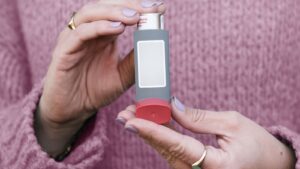
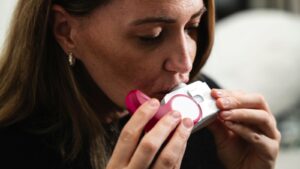
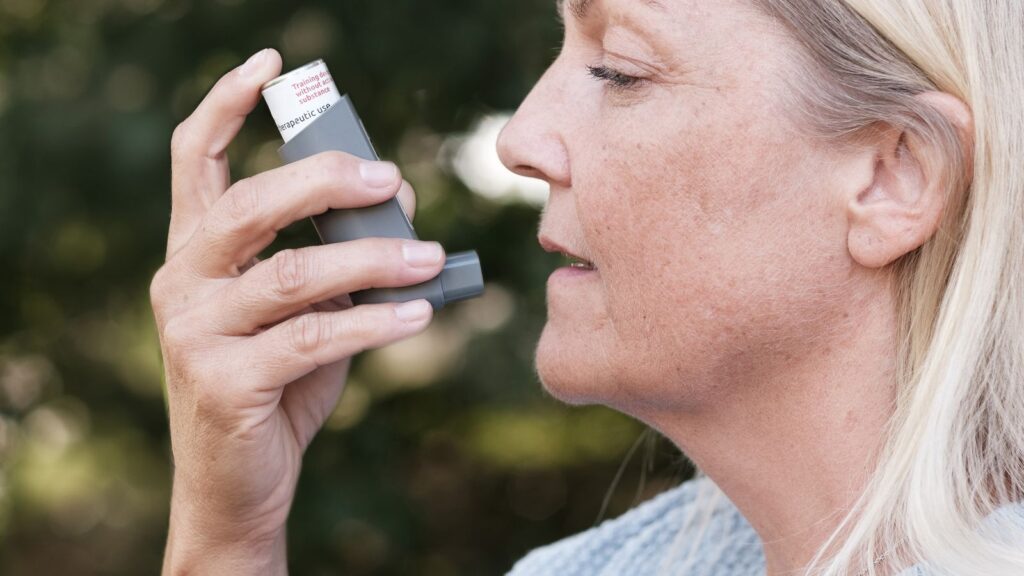
Inhaler technique is the clearest example. People can use an inhaler incorrectly for years and have no idea, which means they are getting less of their prescribed medication than their doctor thinks. Nobody catches that during a solo walk. It gets caught when somebody watches you do it.
The same goes for breathing mechanics and pacing, which are both learnable and both usually wrong at the start.
What walking on your own is genuinely good for
Maintenance. Once a program has rebuilt your capacity and taught you how to read your own signals, walking regularly is one of the best things you can do to hold onto it. Rehabilitation gets you up the hill. Your own routine keeps you there.
The mistake is using solo exercise as a substitute for the climb rather than the thing that follows it.
Where the video libraries and apps sit
Somewhere in between, and it depends entirely on what is behind them.
A library of exercise videos is structured solo exercise. That is better than nothing and worse than supervision, and it is fine as long as it is described that way. An app that checks in on you is still not somebody watching your oxygen while you work and changing the plan because of what they saw.
The question to ask any provider is simple: who looks at how I responded, and when do they change what I am doing? If the answer is nobody, or an algorithm, you are buying structured solo exercise. There is nothing wrong with that, but you should know that is what it is, and it is usually not what your insurance is willing to pay for.
Frequently asked questions
Walking is valuable and worth doing. It is not equivalent to a supervised rehabilitation program, which adds prescribed progression, monitoring during exertion, and education on managing your condition. Many people benefit most from doing a program and then walking regularly to maintain what they gained.
You can exercise at home, and home based programs exist. The distinction is not the location, it is whether a qualified clinician is monitoring and adjusting. Home based supervised rehabilitation is a real thing. Home based unsupervised exercise is just exercise.
That is genuinely hard to judge alone, which is the point of this article. If you are exercising independently, talk to your clinician about what your safe limits are and whether you should be monitoring your oxygen while you do it.
Coverage is based on your diagnosis and clinical documentation, not on whether you already exercise. Being active does not disqualify you.
Worth two minutes to check
If you have been doing this on your own and it has stopped moving forward, a supervised program is usually covered and most people never check.
Call (866) 972-8228, or check your eligibility online. It takes a few minutes and needs no account. Read how virtual pulmonary rehab at Bloom works.
This article is general education and is not medical advice for your individual situation. Talk to your own clinician before starting or changing an exercise program.