If your doctor mentions a respiratory therapist, or you are choosing a rehab program, it helps to know who these clinicians are and what they actually do. This guide explains the job in plain language, who else is usually on a pulmonary rehab team, and what to ask about who will lead your sessions. It also says plainly what the research does not tell us: no source we reviewed says that one profession must run rehab.
What does a respiratory therapist do?
The U.S. Bureau of Labor Statistics says that respiratory therapists care for patients who have trouble breathing, for example because of conditions such as asthma or chronic obstructive pulmonary disease (COPD). It lists their typical duties as:
- Interviewing and examining patients with breathing or heart and lung disorders
- Consulting with physicians about patients’ conditions and developing treatment plans
- Performing diagnostic tests
- Treating patients using a variety of methods
- Monitoring and recording patients’ progress
- Teaching patients how to take medications and use equipment
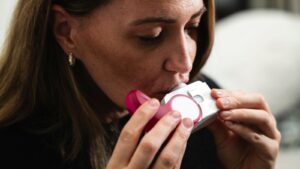
That last duty is the one most people notice in daily life. Many people with asthma or COPD use inhalers, spacers or other devices, and a respiratory therapist is trained to teach you how to use them.
Where they work, how they are trained and licensed
According to the Bureau of Labor Statistics, most respiratory therapists work in hospitals. They typically need at least an associate’s degree in respiratory therapy from an accredited program, and they are required to be licensed in all states except Alaska, where national certification is recommended. There are two main levels of certification: Certified Respiratory Therapist (CRT) and Registered Respiratory Therapist (RRT).
Who is on a pulmonary rehab team?
The American Lung Association says your rehab team often includes doctors, nurses, physical therapists, respiratory therapists, exercise specialists and dietitians, and that together they create a personal program to meet your specific needs. It describes rehab as a program of education and exercise, and says it is more than just exercise: it is education and support for people living with lung disease.
The National Heart, Lung, and Blood Institute (NHLBI) calls pulmonary rehab a supervised medical program that helps people with lung disease live and breathe better. It lists exercise training, breathing techniques, education, psychological counseling and nutritional counseling, and says the team uses breathing tests, an exercise stress test and a six-minute walk test to design your plan. Programs are usually 2 or 3 weekly sessions lasting several weeks or months. For a look at a first visit, see what happens in a pulmonary rehab session, and for how to get started, see our guide to referrals for pulmonary rehab.
Why it matters who runs your rehab
Here is the honest picture. A Cochrane review of pulmonary rehabilitation in COPD included 65 randomized trials with 3,822 participants. Its authors concluded that rehab is beneficial in improving health-related quality of life and exercise capacity. The pages we reviewed do not compare programs by which profession leads them, so we cannot tell you that one job title produces better results.
What we can say is that the work of rehab is specific. You are exercising with a lung condition, often while using oxygen or inhalers, and learning breathing techniques and how to manage symptoms. The American Lung Association notes that your therapist will assess you at the start and guide you through exercises, including how to use your oxygen during activity. So it is reasonable to want the people leading your sessions to be trained for that, to know your medicines and devices, and to adjust your plan as you change.
If you are weighing a program against exercising alone, our article on pulmonary rehab vs exercising on your own covers what supervision adds. If you have a COPD diagnosis, see exercises for COPD for safe ways to start.
Questions to ask any rehab program
- Who will lead my sessions, and what are their licenses and credentials?
- Will I work one on one with a clinician, or alongside other patients?
- Who builds my plan, and who changes it when I get stronger or have a bad week?
- How are my oxygen level and heart rate watched during exercise?
- What do I do if I feel worse during a session?
- Will you confirm my insurance coverage before I start?
For more on comparing programs, see how to choose a virtual pulmonary rehab program.
Where Bloom fits
Bloom offers virtual pulmonary rehab from the comfort of home. Every rehab session is one on one and live by video, run by licensed respiratory therapists and clinical exercise physiologists, and billed to insurance. Each patient gets an individualized treatment plan, and we meet every patient where they are. Education sessions about your condition may include other patients. You can read more about asthma rehab with a respiratory therapist or meet our team.
Frequently asked questions
The Bureau of Labor Statistics says respiratory therapists care for patients who have trouble breathing, such as people with asthma or COPD. Their duties include examining patients, consulting with physicians on treatment plans, performing diagnostic tests, treating patients, monitoring progress and teaching patients how to take medications and use equipment.
No. They are separate professions. The American Lung Association lists nurses and respiratory therapists as different members of a pulmonary rehab team. The Bureau of Labor Statistics says respiratory therapists typically need at least an associate’s degree in respiratory therapy and are licensed in all states except Alaska.
The American Lung Association says a rehab team often includes doctors, nurses, physical therapists, respiratory therapists, exercise specialists and dietitians, who create a personal program to meet your specific needs. Teams differ from program to program, so ask who will lead your sessions.
The sources we reviewed describe rehab as a team effort and do not say that one profession must run it. What matters is that the people leading your sessions are trained and licensed, and that your plan fits you. Ask any program who will be with you and what their credentials are.
Bloom’s rehab sessions are live by video. Every rehab session is one on one, and sessions are run by licensed respiratory therapists and clinical exercise physiologists. Your doctor sends the referral, and Bloom confirms insurance coverage before you start.
Ready to talk about rehab?
Not sure whether rehab fits you? Take our free 2 minute lung health assessment. Ready to take the next step? Call 1-866-972-8228 or fill out the see if you qualify form.
This article is for education only and is not medical advice. Talk with your doctor about what is right for you.